Generating Settlement Demands from Medical Records in 1 Click
Convert 5 hours of demand drafting into 15 minutes of AI synthesis.
Author
Johan Ang • June 30, 2026
QUICK VERDICT
Choose Manual Drafting if:
- You prefer drafting chronological medical narratives manually.
Choose Genovra AI if:
- You want to automate timeline generation and damages calculation with Page/Line citations.
Drafting a pre-litigation settlement demand letter is one of the most critical, yet tedious, tasks in personal injury law. Paralegals spend hours parsing medical records to build the injury timeline, calculate special damages, and draft the narrative. Genovra AI's One-Click Demand Letter Generation automates this entire process, instantly synthesizing raw medical PDFs into a court-ready, fully cited demand letter directly inside Microsoft Word.
The Anatomy of a Demand Letter Bottleneck
A successful personal injury demand letter requires absolute factual precision. It must tell a compelling narrative of the plaintiff's suffering, supported by an exact calculation of medical expenses, lost wages, and future care costs.
To draft this, a paralegal or junior associate must manually execute several time-consuming steps:
- Read the entire medical file (often 500+ pages) to identify the first mention of symptoms.
- Extract all relevant ICD-10 diagnostic codes and treatment dates.
- Calculate total billed amounts across multiple disorganized provider ledgers.
- Draft a chronological narrative that links the incident to the injuries.
For a standard case, this process can take 5 to 8 billable hours. This administrative bottleneck delays sending the demand, which delays settlement negotiations and ultimately impacts the firm's cash flow.
One-Click Demand Letter Generation
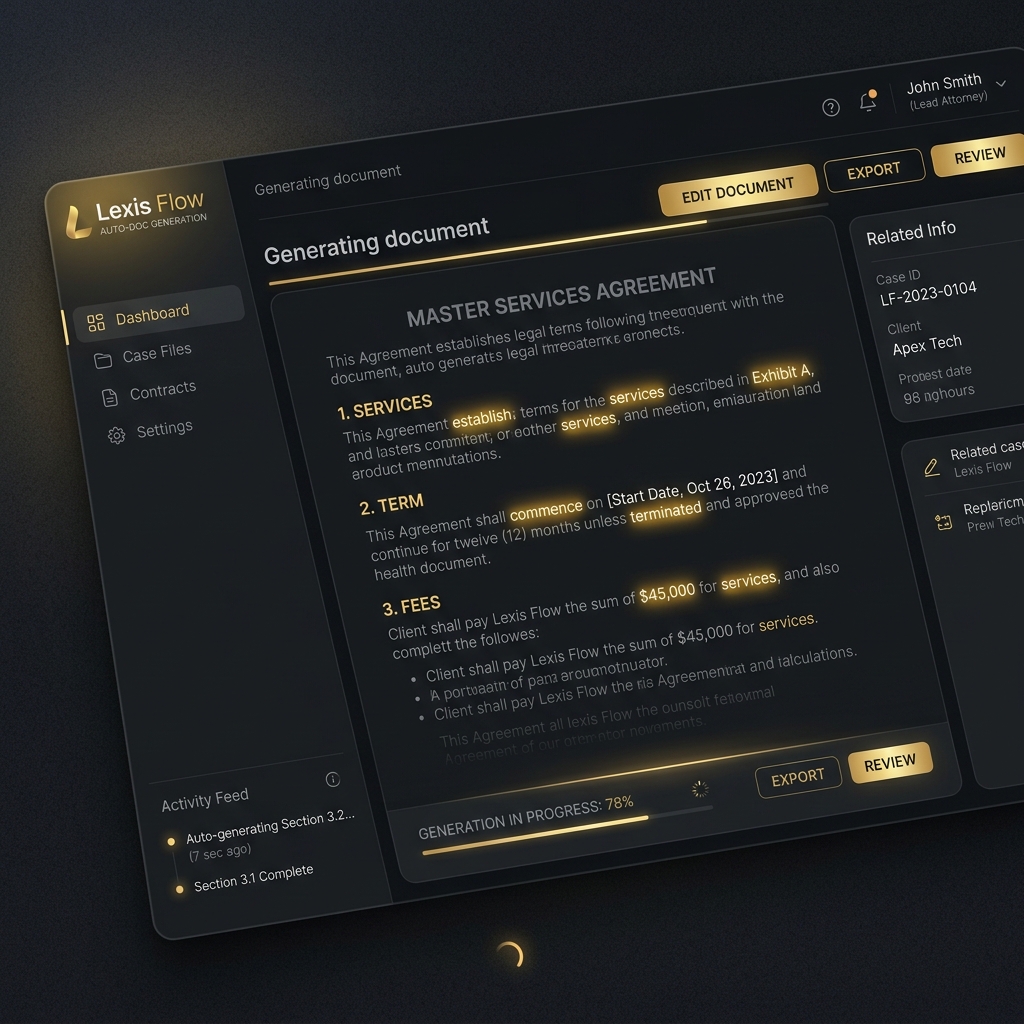
Genovra AI eliminates this bottleneck by automating the synthesis and drafting process. Once you upload the client's medical records and incident reports to the Genovra dashboard, the system's Automated Medical Record Review engine processes the files in 12–18 minutes.
With the click of a button, Genovra AI generates a comprehensive settlement demand letter based on the processed files. The generated draft includes:
- Chronological Medical Narrative: A seamless timeline of treatment, from the initial ER visit to ongoing physical therapy.
- Damages Ledger: An itemized calculation of all medical expenses extracted from the billing sheets, including outstanding balances.
- Impact Summary: A narrative detailing the impact of the injuries on the plaintiff's daily life, based on clinical notes.
The Importance of Citation Grounding
What separates Genovra AI from general-purpose drafting tools like ChatGPT is its Zero-Hallucination Sourcing. Every factual assertion and medical expense listed in the Genovra-generated demand letter is backed by an Exact Page and Line citation.
If the demand letter states, "The plaintiff required a cervical MRI which revealed a C5-C6 herniation (Total Cost: $2,500)," it will append the citation directly to the source document: (Imaging Report, Page 42, Line 8). This allows the reviewing attorney to instantly verify the claims before sending the letter to the insurance adjuster, ensuring compliance with ethical standards and avoiding embarrassing factual errors.
Native Microsoft Word Integration
Firms do not send demand letters from a web dashboard; they send them on firm letterhead. Through the Genovra AI Microsoft Word Add-in, attorneys can generate the demand letter directly inside their drafting environment.
The AI outputs the fully formatted, cited draft directly into your Word document. You can instantly apply your firm's templates, edit the tone of the introductory arguments, and finalize the document without ever switching tabs or losing focus.
ROI and Pass-Through Billing
The return on investment for automating demand letters is massive. By converting 5 hours of manual drafting into 15 minutes of AI synthesis and attorney review, boutique firms can drastically increase their case velocity.
Furthermore, because Genovra AI uses a credit-pack model rather than a per-seat subscription, the cost of generating the demand letter can be treated as a direct case expense. Using Genovra's Disbursement Invoice Generator, the minor cost of processing the medical records can be billed directly to the client ledger, resulting in a net cost of $0 for the firm.
The Verdict: Faster Settlements, Lower Overhead
In plaintiff litigation, speed to demand equals speed to settlement. By deploying Genovra AI to handle the heavy lifting of medical record synthesis and demand drafting, boutique law firms can resolve cases faster, reduce paralegal overhead, and maintain the highest standards of factual accuracy.
/ Technical Specification
BigLaw Scope vs. Boutique Depth
| Capability | Manual Drafting | Genovra AI |
|---|---|---|
| Automated Medical Timeline | No | Yes |
| ICD-10 Damages Calculation | No | Yes |
/ Frequently Asked Questions
Infrastructure & Compliance Details
Can I edit the generated demand letter?
Yes, the demand letter is generated directly in Microsoft Word, allowing you to edit the tone and apply firm letterhead.
Stop the Paralegal Bottleneck.
We process 500 pages in 12-18 minutes with exact Page and Line citations. We run Genovra on a real document from a closed case before you pay.
Start Free Trial — 50 Credits, No Credit Card